
By Dr Najib Boudra, obstetrician gynecologist. Updated on 10 November 2026.
Five days late, then seven, then ten. You do another test: still negative. Between hope, worry and confusion, this is one of the situations gynecologists see very often. In the large majority of cases, there is a simple explanation.
Dr Najib Boudra reviews the possible causes of a late period with a negative test, the signs that call for a consultation, and the assessment offered at our gynecology clinic in Fes.
Late periods keep happening?
A consultation with ultrasound often finds the cause quickly. Call us for an appointment.
First, was the test reliable?
Before looking further, check one thing. A urine test done too early can be falsely negative, simply because the pregnancy hormone is not yet concentrated enough. This is especially true if you ovulated later than usual this month.
The NHS advises repeating the test a few days later, preferably with the first urine of the morning, following the instructions carefully. A blood test measuring beta-hCG gives a more precise answer. Our article pregnancy test: when to take it explains how to pick the right time.
Understanding what controls the cycle
A period comes about two weeks after ovulation. If ovulation is delayed, the period is too. Ovulation depends on a delicate dialogue between the brain, the pituitary gland and the ovaries.
Anything that disturbs this dialogue can shift the cycle: strong emotion, a change of routine, illness, a hormonal imbalance. So one cycle can be longer in a given month without meaning anything serious.
Planning a pregnancy?
Irregular cycles deserve an assessment. Review the situation with Dr Najib Boudra.
Common and often temporary causes
Stress and upheaval
A bereavement, moving house, exams, a trip with jet lag or an intense period at work can delay ovulation. The cycle often settles on its own.
Weight changes and intensive exercise
Rapid weight loss, a very restrictive diet or sustained training can pause ovulation. Significant weight gain can also disrupt the cycle.
Stopping contraception
After stopping the pill or a hormonal injection, the cycle may take a few months to find its rhythm again.
Breastfeeding
While breastfeeding, periods may be absent or irregular. Be aware that ovulation can happen before periods return.
Some medicines
Some treatments, including certain antidepressants or antipsychotics, can change the cycle. Always tell your doctor about them.
Hormonal causes to look for
When late periods keep happening, a hormonal cause should be looked for.
Polycystic ovary syndrome
This is a common cause of long, irregular cycles. It may come with acne, extra hair growth or weight gain. Our article on PCOS and fertility covers it in detail.
The thyroid
An overactive or underactive thyroid can disturb periods. A simple blood test can check this.
Prolactin
A high level of this hormone, sometimes linked to a medicine, can block ovulation. It sometimes shows as milky discharge from the breasts outside breastfeeding.

Approaching menopause
From the forties, cycles often become irregular, with delays and sometimes hot flushes.
When should you see a doctor?
The NHS recommends seeing a doctor if:
- your periods have stopped for three months or more and you are not pregnant;
- late periods keep happening cycle after cycle;
- you are under 45 and your periods have stopped;
- you bleed between periods or after sex;
- you are trying to conceive and your cycles are irregular.
Seek urgent care for severe pain on one side of the abdomen, feeling faint or unusual bleeding, even with a negative test: an early pregnancy in the wrong place must be ruled out.
If your cycles have been irregular for a long time, also read irregular periods: the causes.
The assessment at the consultation
The doctor starts by listening: how regular your cycles usually are, recent events, your weight, your medicines. After an examination, a pelvic ultrasound may follow, showing the thickness of the womb lining and the appearance of the ovaries.
Depending on the situation, a blood test completes the picture: beta-hCG to rule out pregnancy for certain, thyroid hormones, prolactin, and cycle hormones on a specific day.

A practical tip: write down your period dates in a calendar or app for a few months. This simple record helps the doctor enormously.
Booking an appointment in Fes
A single late period with a negative test is often nothing to worry about. But if it lasts or keeps happening, it is wise to understand why, especially if you are planning a pregnancy.
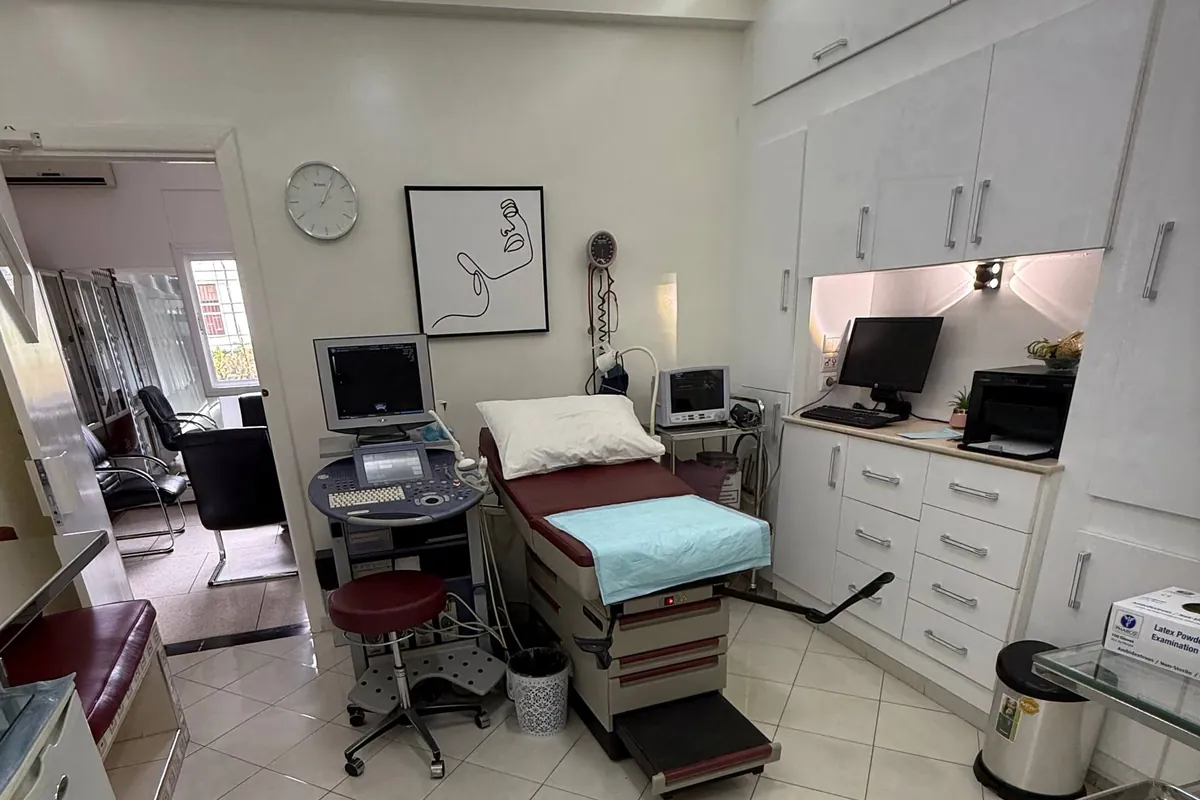
At the Boudra Fertility Center, Dr Najib Boudra and his team see you in consultation for this assessment, with ultrasound on site. For an appointment, call 05 35 93 08 18.
See a doctor if the delay continues
A question, a first appointment? The Boudra Fertility Center team is here to help.
Boudra Fertility Center, 7 Rue Abdelkrim El Khattabi, 30000 Fes, Morocco
Frequently asked questions
How many days late is normal?
A shift of a few days from one month to the next is common. If you are more than a week late, repeat the test. If it keeps happening or lasts, see a doctor.
Can I be pregnant with a negative test?
Yes, if the test was done too early. Repeat it a few days later or have a blood test.
Can stress really delay a period?
Yes. Significant stress can delay ovulation, and therefore the period. The cycle often settles afterwards.
Should I take something to bring on my period?
Not without medical advice. The doctor first looks for the cause before suggesting any treatment.
Sources
This article is for information only and does not replace a consultation. For any question about your situation, talk to your doctor.