
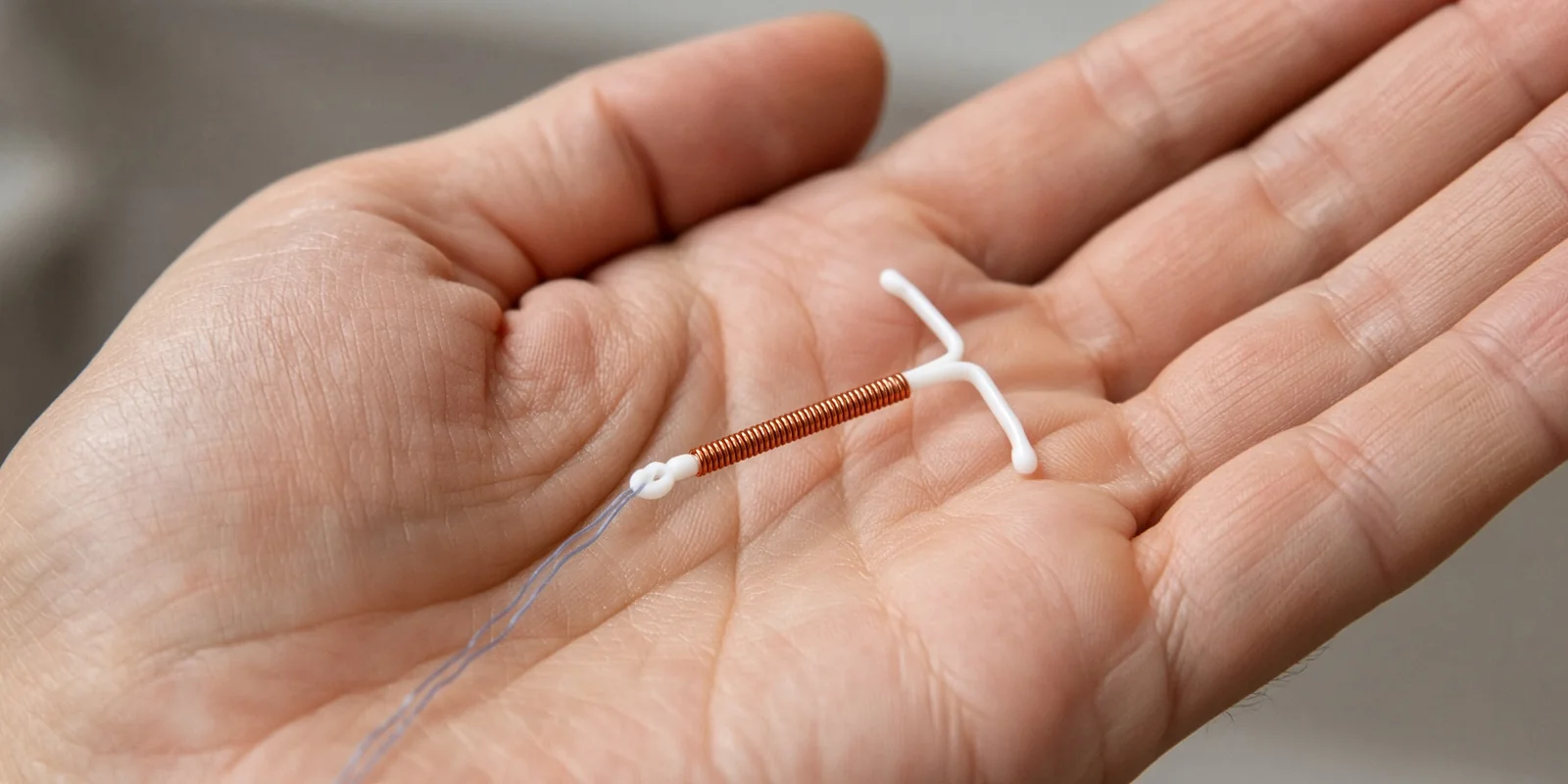
The IUD, or intrauterine device, also called the coil, is a long acting contraceptive method that many women appreciate for its simplicity: once in place, it works for several years without needing to think about it every day. Yet it still raises many questions and some misconceptions.
This article explains the two types of IUD, how insertion works, what you may feel, the benefits and drawbacks, and follow-up and removal. The aim is to help you decide with full information together with your gynecologist.
What is an IUD?
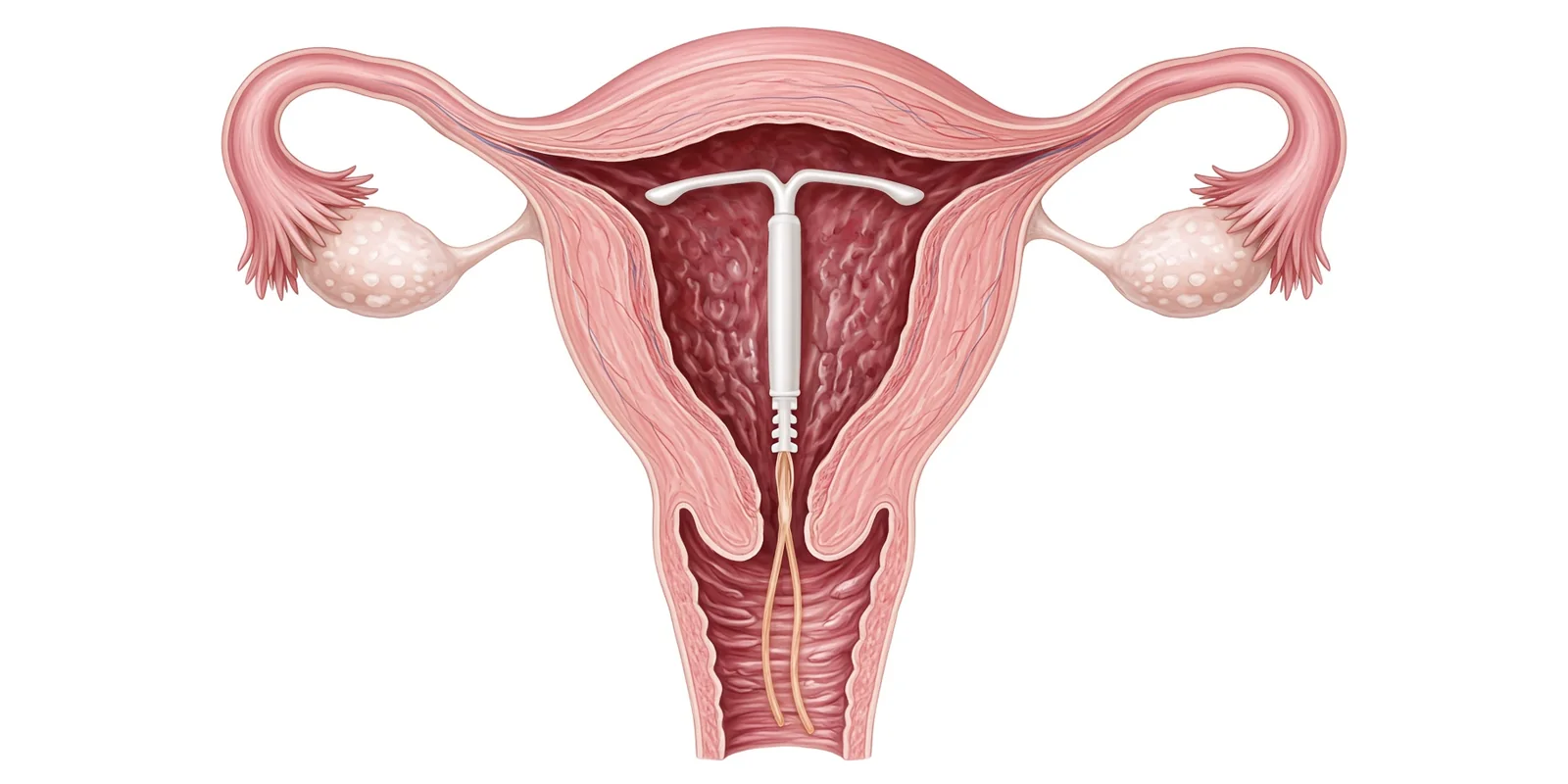
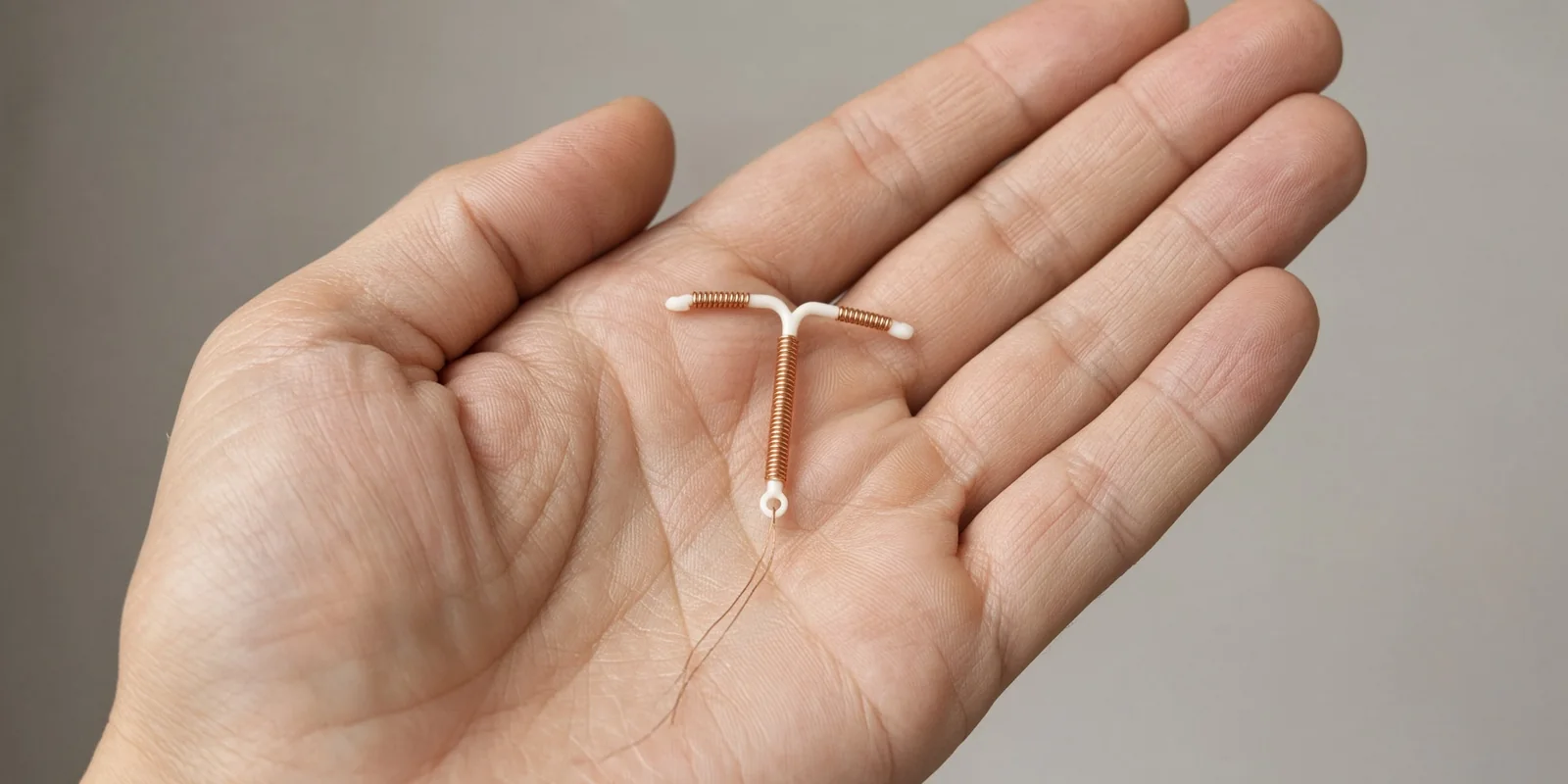
An IUD is a small T shaped device, a few centimetres long, placed inside the uterus. Two thin threads hang slightly into the vagina: they allow its presence to be checked and make removal easy.
There are two main types:
- the copper IUD: it contains no hormones. Copper makes the environment of the uterus unfavourable to sperm and fertilisation;
- the hormonal IUD: it continuously releases a small amount of progestogen inside the uterus. It thickens cervical mucus and thins the uterine lining.
Both are effective and stay in place for several years, the exact duration depending on the model.
Benefits of the IUD
- Contraception you cannot forget: nothing to take every day.
- Long lasting action, several years depending on the model.
- Quick reversibility: fertility usually returns as soon as it is removed.
- The copper IUD suits women who do not want or cannot take hormones.
- The hormonal IUD often reduces the heaviness and pain of periods, which can be a real benefit for women with heavy periods.
- It is compatible with breastfeeding.
Drawbacks and possible effects
Like any method, the IUD has limits:
- the copper IUD can make periods heavier or more painful, especially in the first months;
- the hormonal IUD may cause irregular bleeding at first, then very light or absent periods, which is not dangerous;
- rarely, the IUD can be expelled, especially in the first months;
- complications at insertion, such as infection or perforation of the uterus, are rare;
- it does not protect against sexually transmitted infections.
Who is it for?
The IUD suits many women, including those who have never had children. However, it is not advised in some situations: a current genital infection, unexplained bleeding, an abnormally shaped uterus or some fibroids that distort the cavity. The hormonal IUD also has a few specific contraindications.
That is why insertion is preceded by a consultation: questions, a gynecological examination, and often a pelvic ultrasound (page in French) to check the shape of the uterus.
How is it inserted?
Timing
Insertion can be done at any time in the cycle, as long as you are sure you are not pregnant. It is often done during or just after a period, when the cervix is slightly more open. After childbirth, a few weeks are usually allowed to pass.
The procedure
Insertion takes place in the clinic, in a few minutes, without general anaesthesia. The doctor places a speculum, cleans the cervix, measures the depth of the uterus and then inserts the IUD through a thin tube. The threads are then trimmed to the right length.
What you may feel
Insertion can cause pain similar to strong period cramps, usually brief. Taking a painkiller before the appointment can help. Cramps and light bleeding may continue for a few days. If you feel anxious, say so: the doctor will take time to explain each step. Our article on the first gynecology consultation may also reassure you.
Follow-up after insertion
A check-up is generally planned after your first period or in the following weeks, to make sure the IUD is correctly positioned, often with an ultrasound. After that, regular gynecological follow-up is enough.
See a doctor promptly if you have:
- fever, lower abdominal pain or foul smelling discharge;
- pain during intercourse that started after insertion;
- threads you can no longer feel or that seem longer;
- a late period or suspected pregnancy.
Removing the IUD
The IUD can be removed at any time, at your request, in a few seconds at the clinic by gently pulling on the threads. Removal is usually less uncomfortable than insertion. If you want to continue contraception, a new IUD can be fitted at the same visit.
If you want a pregnancy, fertility usually returns quickly. It is a good time for a pre-conception consultation.
Getting an IUD fitted in Fes
Are you considering an IUD, hesitating between copper and hormonal, or is yours due for replacement? A consultation checks that it suits you, helps choose the right model and plans insertion in good conditions.
At Boudra Fertility Center, an IVF center in Fes, Dr Najib Boudra, a gynecologist with more than 30 years of experience, carries out IUD insertion, ultrasound checks and removal in a gynecology consultation. Book an appointment on 05 35 93 08 18.
Book an appointment in Fes
A question, a first appointment? The Boudra Fertility Center team is here to help.
Boudra Fertility Center, 7 Rue Abdelkrim El Khattabi, 30000 Fes, Morocco
Frequently asked questions
Does IUD insertion hurt?
It can cause pain similar to strong period cramps, usually brief. A painkiller taken before the appointment can help.
Can I have an IUD if I have never had children?
Yes, after a consultation and examination confirming there is no contraindication.
Does an IUD cause infertility?
No. Fertility usually returns quickly after removal.
Can my husband feel the IUD?
Rarely. If the threads are bothersome, the doctor can shorten them at a consultation.
This article is for information only and does not replace a consultation. For any question about your situation, talk to your doctor.