Periods that come every two or three months, acne that lingers long after the teenage years, unwanted hair growth, and sometimes a pregnancy that is slow to happen: taken together, these signs often point to polycystic ovary syndrome, known as PCOS.
PCOS is a common hormonal condition in young women and a classic cause of ovulation problems. The good news is that it can be diagnosed with simple tests and that effective options exist, especially when you are hoping to have a baby. Here is what to know before you talk to your gynecologist in Fes.
What is PCOS?
PCOS is a hormonal imbalance that affects how the ovaries work. Each month, several follicles (small sacs that each contain an egg) start to grow, but none of them matures reliably. Ovulation then becomes irregular, or stops altogether.
The word “polycystic” is misleading: these are not true cysts but many small follicles that show up on ultrasound. PCOS often comes with an excess of so-called androgen hormones and, in some women, with insulin resistance, meaning the body has trouble using sugar normally.
The exact causes are still not fully understood. It tends to run in families, and lifestyle can make symptoms worse without being the whole explanation. PCOS is nobody’s fault and it is not a dead end: it is a medical condition that can be followed and treated.
Symptoms that suggest PCOS
Signs vary a great deal from one woman to another. Some have several, others only one. Typical signs include:
- Irregular cycles: periods that are far apart, unpredictable or absent for months.
- Signs of excess androgens: persistent acne, hair on the face, abdomen or back, thinning hair on the top of the head.
- Weight gain, often around the waist, and difficulty losing weight.
- Difficulty conceiving, because ovulation does not happen regularly.
- Sometimes darker patches of skin in body folds (neck, armpits), a possible sign of insulin resistance.
None of these signs is enough on its own to make the diagnosis. Irregular periods can also come from the thyroid, high prolactin, stress or significant weight loss. That is why a full check-up matters.
How is PCOS diagnosed?
The diagnosis is based on at least two of the following three criteria, once other possible causes have been ruled out:
- rare or absent ovulation (long or irregular cycles);
- excess androgens, either visible (acne, hair growth) or measured in a blood test;
- ovaries with many small follicles on a pelvic ultrasound.
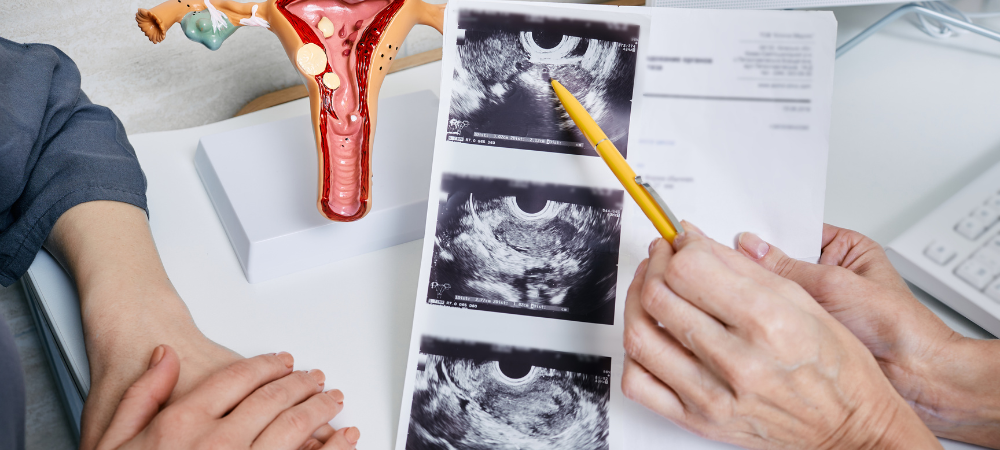
In practice, the consultation starts with a detailed discussion of your cycles, your medical history and your symptoms, followed by a clinical examination. A pelvic ultrasound, preferably transvaginal, shows the ovaries and the lining of the womb. Blood tests, ideally early in the cycle, measure the relevant hormones (LH, FSH, testosterone, prolactin, TSH and sometimes AMH) and can check blood sugar and cholesterol.
In teenagers, doctors are more cautious, because irregular cycles are normal for the first few years after periods begin.
PCOS and fertility: can you get pregnant?
Yes, in many cases. PCOS makes conception harder because ovulation is irregular, but the ovaries usually contain plenty of follicles. The issue is not a lack of eggs but an ovulation that does not trigger properly.
If your cycles are very irregular and you want to start a family, it makes sense to see a doctor without waiting for a full year of trying. The work-up includes your partner too: a semen analysis and a check that the fallopian tubes are open are part of the assessment, because several factors can combine. To know when it is time to seek help, our article on couple infertility and when to see a specialist gives useful guidance.
Treatment options
Care depends on your goal: easing symptoms, regulating cycles or achieving a pregnancy.
Lifestyle
Regular physical activity and a balanced diet low in fast sugars improve insulin sensitivity. If you are overweight, even a moderate weight loss can be enough to bring back ovulation in some women. This is not a minor detail: it is often the first step, and it should be supported and realistic.
Treating the symptoms
When pregnancy is not the goal, hormonal treatment can regulate periods, protect the womb lining and improve acne or hair growth. Other medicines may be discussed depending on your metabolic results. The choice is made case by case with your doctor.
Treatment to achieve a pregnancy
When you want a baby, treatment aims to trigger ovulation. Ovulation-inducing tablets usually come first, with ultrasound monitoring to follow how the follicles grow and to limit the risk of a multiple pregnancy. If that is not enough, low-dose hormone injections may be offered.
If these steps do not work, or if other factors are involved, assisted reproduction can help: intrauterine insemination or in vitro fertilisation. In women with PCOS, stimulation must be monitored especially closely, because the ovaries tend to respond strongly. An experienced team adjusts the doses and the protocol to reduce the risk of ovarian hyperstimulation.
Follow-up beyond fertility
PCOS is not only about pregnancy. It comes with a higher risk of type 2 diabetes, cholesterol problems and, during pregnancy, gestational diabetes. Periods that stay very far apart for a long time can also thicken the womb lining, which needs to be protected.
Regular follow-up helps detect these problems early: weight and blood pressure checks, blood sugar tests and monitoring of your cycles. The emotional side matters too. Acne, hair growth or waiting for a pregnancy can weigh on your mood, and it is perfectly fine to raise this during your consultation.
To learn more about the causes of difficulty conceiving, you can also read our page on infertility (page in French).
When should you see a gynecologist?
Book an appointment if your periods have been irregular or absent for several months, if you notice unusual acne or hair growth, or if you have been trying to conceive without success while your cycles are irregular. An early diagnosis lets you act on the symptoms, protect your long-term health and prepare for a pregnancy in good conditions.
At Boudra Fertility Center, the first IVF center in Fes, Dr Najib Boudra and his team, with more than 30 years of experience, offer a full assessment and care tailored to your situation. Do not hesitate to come for a consultation: every case of PCOS is different, and the right plan is built together with you.
Book an appointment in Fes
A question, a first appointment? The Boudra Fertility Center team is here to help.
Boudra Fertility Center, 7 Rue Abdelkrim El Khattabi, 30000 Fes, Morocco
Frequently asked questions
Does PCOS stop you from having a baby?
No. PCOS makes ovulation irregular, which can delay pregnancy, but many women with PCOS become mothers, either naturally or with treatment to trigger ovulation.
Can PCOS be cured?
It does not disappear completely, but its symptoms can be well controlled with a healthy lifestyle and, when needed, suitable treatment. The signs often change with age.
Do you need an ultrasound to diagnose PCOS?
It helps a lot, but it is not always essential: the diagnosis relies on two out of three criteria once other causes are ruled out. Your gynecologist will choose the useful tests.
Does losing weight help with PCOS?
If you are overweight, even a moderate weight loss often improves cycle regularity and the chances of ovulation. The goal should stay realistic and supported.
Does the pill treat PCOS?
It regulates periods and improves acne or hair growth, but it treats the symptoms, not the cause. It is stopped when you start trying for a baby.
This article is for information only and does not replace a consultation. For any question about your situation, talk to your doctor.