
By Dr Najib Boudra, obstetrician gynecologist. Updated on 9 November 2026.
You are a few weeks pregnant, everything seemed fine, and this morning you notice blood. Your heart races and questions pile up. Is it serious? Should you go to the emergency department or wait? Many women go through this moment, and it deserves a clear answer rather than a panicked search online.
Bleeding in early pregnancy does not always mean something is wrong. But it should never be ignored. Here, Dr Najib Boudra explains the possible causes, the signs that call for an urgent visit and what is checked during a pregnancy follow-up consultation in Fes (page in French).
Bleeding? Get checked
Call us now: a consultation with an ultrasound scan is often reassuring, and allows quick action when needed.
Bleeding in the first trimester: common, but never trivial
Light bleeding is common in the first weeks of pregnancy. The NHS points out that it is often not serious, but it should always be reported to a health professional. The reason is simple: with the naked eye, nothing can tell harmless bleeding apart from bleeding that needs care.
Blood can look different from one woman to another: a few brownish spots on your underwear, pink discharge when you wipe, or brighter red bleeding, sometimes with clots. Write down what you notice. These details help the doctor, but they never replace an examination.
If you have not confirmed your pregnancy yet, our article on when to take a pregnancy test will help you read the result.
Possible causes of early bleeding
Implantation bleeding
Around the time your period was due, the embryo settles into the lining of the uterus. This can cause light pink or brown spotting that is short and scanty. Many women mistake it for a light period.
A more sensitive cervix
During pregnancy, the cervix has a richer blood supply. Intercourse or a gynecological examination can cause light bleeding, which is usually harmless.
An infection
A vaginal or cervical infection can cause blood-stained discharge, sometimes with itching or an unusual smell. It can be treated once it has been identified.

A miscarriage or an ectopic pregnancy
These are the two situations the doctor wants to rule out first. A miscarriage may show as bleeding with cramps. An ectopic pregnancy, which develops outside the uterus, can cause bleeding and pain on one side of the abdomen. Only an ultrasound scan and blood tests can tell.
Unsure about what you are feeling?
Do not stay in doubt. Dr Najib Boudra’s team will offer you a quick appointment.
Warning signs that need care without delay
Some signs should not wait for a routine appointment. Call your doctor or go to the emergency department if you have:
- heavy bleeding that soaks a pad quickly;
- severe pain in the lower abdomen, especially on one side;
- pain at the tip of the shoulder with no clear reason;
- dizziness, feeling faint or fainting;
- fever or chills;
- passing clots or tissue.
These symptoms can point to an ectopic pregnancy or a miscarriage in progress, two situations that need a quick assessment. A trip that turns out to be unnecessary is far better than delayed care.
What happens at the consultation
The appointment starts with precise questions: the date of your last period, how the bleeding looks and how much there is, any pain, your medical history. Then comes the examination.
The ultrasound scan
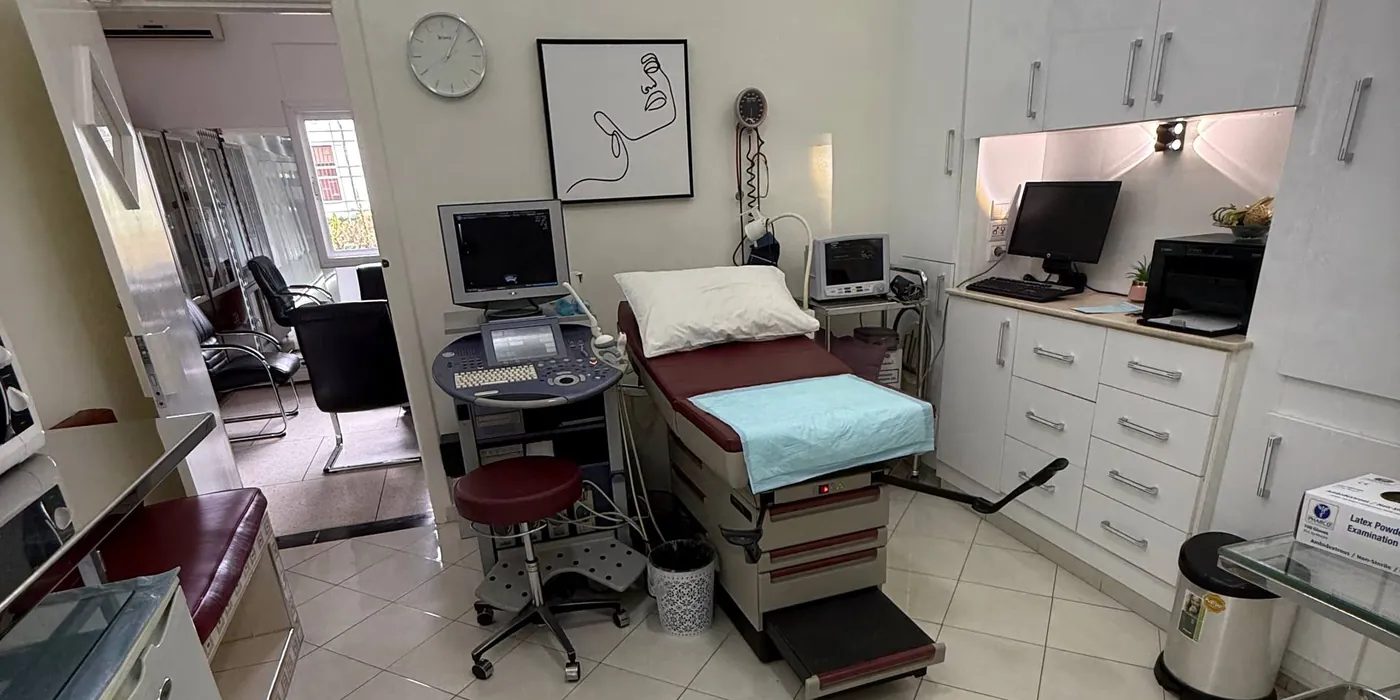
It checks that the pregnancy is inside the uterus and, depending on how far along you are, shows the embryo’s heartbeat. Very early on, the image may still be too small to conclude, so the doctor may suggest another scan a few days later.

Blood tests
The pregnancy hormone, beta-hCG, is often measured twice, 48 hours apart. The way it changes shows how the pregnancy is progressing. The doctor also checks your blood group and rhesus factor, because a preventive injection may be discussed depending on your situation.
To see where these tests fit in the whole follow-up, read our pregnancy ultrasound calendar.
And later in pregnancy?
Bleeding in the second or third trimester has different causes. It can be linked to the position of the placenta, to the placenta coming away from the wall of the uterus or to changes in the cervix. In every case, the rule is the same: see a doctor the same day, without waiting for it to stop.
If the bleeding comes with contractions, leaking fluid or fewer baby movements, go straight to the maternity unit.
While you wait for your appointment: good habits
A few simple steps help the doctor and protect you:
- use pads rather than tampons, so the amount can be judged;
- note the time it started, the colour and how the bleeding changes;
- avoid intercourse until the doctor has examined you;
- take no medicine without advice, even your usual painkiller;
- gather your results: test, blood tests, previous scans.

Above all, do not stay alone with your worry. Early pregnancy signs can be confusing: our article on the first symptoms of pregnancy helps you sort them out.
Being seen quickly in Fes
At the Boudra Fertility Center, bleeding in early pregnancy is treated as a priority request. Call 05 35 93 08 18: the team will offer you an appointment as soon as possible for a consultation with an ultrasound scan. Outside opening hours, or if you have a warning sign, go to the nearest emergency department.
A quick consultation is often reassuring. And when treatment is needed, it starts at the right time.
Call 05 35 93 08 18 to be seen quickly
A question, a first appointment? The Boudra Fertility Center team is here to help.
Boudra Fertility Center, 7 Rue Abdelkrim El Khattabi, 30000 Fes, Morocco
Frequently asked questions
Is light bleeding in early pregnancy normal?
It is common, especially in the first trimester, and often not serious. It should still always be reported to a doctor, because only an examination can find the cause.
Should I stay in bed after bleeding?
Strict bed rest has not been shown to prevent a miscarriage. Slowing down and avoiding strenuous effort while you wait for medical advice is still sensible.
When can an ultrasound scan reassure me?
Depending on how far along you are, it can locate the pregnancy inside the uterus and show the heartbeat. If it is too early, the doctor will suggest a second scan a few days later.
Sources
This article is for information only and does not replace a consultation. For any question about your situation, talk to your doctor.