
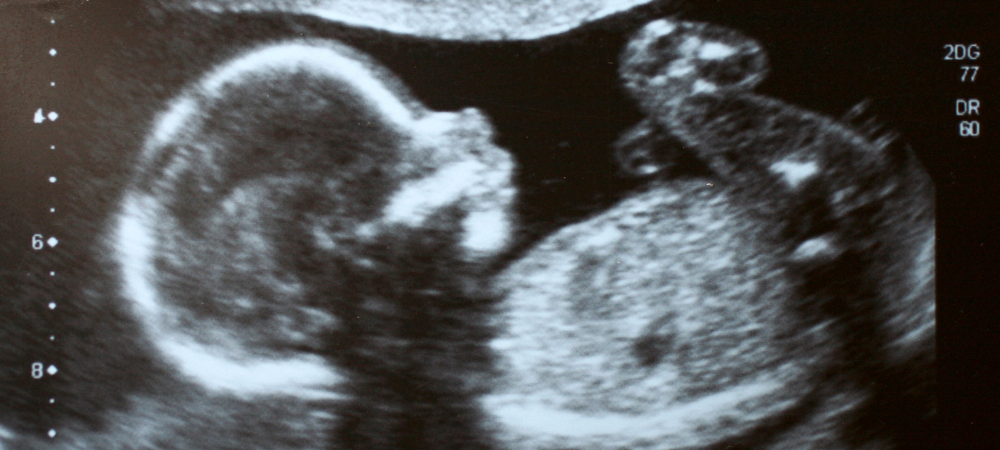
An ultrasound is a special moment in pregnancy: it is often the first time you “see” your baby. But each scan also has a precise medical purpose, and its timing is chosen with care.
Here is the usual schedule of pregnancy ultrasounds, what is checked at each stage and how they fit into your care.
A schedule built on three main scans
The recommendations of obstetrics and gynecology learned societies traditionally include three main ultrasounds, one per trimester. They are expressed in weeks of amenorrhoea, that is, counted from the first day of the last period.
Other scans may be added depending on the situation: bleeding, pain, twin pregnancy, diabetes, high blood pressure or pregnancy after assisted reproduction.
The exact dates are set by your doctor according to the stage of pregnancy. It is useful to book in advance, especially for the first-trimester scan, which has a short time window.
Before the first scan: confirming the pregnancy
An early ultrasound may be done at the start of pregnancy, in particular in case of bleeding, pain, a history of ectopic pregnancy or after fertility treatment. It checks that the pregnancy is inside the uterus and shows the embryo’s heartbeat.
First trimester: the dating scan (11 to 14 weeks)
Done between 11 and 14 weeks of amenorrhoea, this scan has several aims:
- to date the pregnancy precisely and set the due date;
- to check the vitality and number of embryos;
- to measure nuchal translucency, part of the screening for certain chromosomal abnormalities, combined with a blood test;
- to take a first look at the baby’s anatomy.
Timing matters: outside this window, the nuchal translucency measurement can no longer be interpreted.
Second trimester: the anomaly scan (around 20 to 24 weeks)
This is a long and detailed scan. The doctor examines the baby’s organs one by one: brain, face, heart, spine, abdomen, kidneys, limbs. They also check growth, the position of the placenta and the amount of amniotic fluid.
It helps detect certain malformations, but no ultrasound can detect everything. The baby’s sex can often be seen at this stage, if you wish to know.
If there is any doubt, the doctor explains it and may suggest a follow-up scan or a second opinion. In most cases these checks are reassuring.
Third trimester: the growth scan (around 30 to 34 weeks)
This scan monitors the baby’s growth and wellbeing. The doctor checks:
- the baby’s measurements and estimated weight;
- the presentation (head down or breech);
- the position of the placenta and the amount of amniotic fluid;
- if needed, blood flow with Doppler.
This information helps prepare for birth in good conditions.
Ultrasound is part of complete pregnancy care
Ultrasounds do not replace antenatal consultations. Pregnancy care also includes monitoring blood pressure and weight, blood and urine tests, and advice suited to each trimester. The World Health Organization recommends regular antenatal care throughout pregnancy.
At Boudra Fertility Center, care is provided by Dr Najib Boudra, who has more than 30 years of experience. Discover our pregnancy care (page in French) and our gynecology consultations in Fes.
How to prepare for a scan
No special preparation is usually needed. Avoid putting cream on your belly on the day of the scan, as it can affect image quality. Bring your pregnancy record and the reports of previous scans.
Your husband is often welcome: it is a moment to share. If you do not want to know the baby’s sex, say so at the start of the scan.
Doppler, 3D: additional tests when needed
Doppler measures blood flow in the cord, the placenta or some of the baby’s vessels. It is used when growth needs closer monitoring, for example in case of high blood pressure.
Three-dimensional ultrasound can help clarify some images, but it does not replace the reference scans. The timing and type of tests are always adapted to your pregnancy.
When to see a doctor before the next scan
See a doctor quickly in case of bleeding, unusual pain or contractions, loss of fluid, fever, severe headache with vision problems, or if you feel your baby moving less in the third trimester.
If in doubt, it is always better to call: the team will tell you whether to come in quickly or go to the emergency department.
Book an appointment in Fes
A question, a first appointment? The Boudra Fertility Center team is here to help.
Boudra Fertility Center, 7 Rue Abdelkrim El Khattabi, 30000 Fes, Morocco
Frequently asked questions
Is ultrasound dangerous for the baby?
Medical ultrasounds, performed by a professional for a specific reason, are considered safe during pregnancy.
Do I need a full bladder?
It depends on the timing. In very early pregnancy and for an abdominal scan, a slightly full bladder can help. The practice will tell you how to prepare.
Can we find out the baby’s sex?
Often, during the second-trimester anomaly scan, if the baby’s position allows it and if you wish to know.
Does a normal scan guarantee that everything is fine?
It is very reassuring, but no ultrasound can detect every abnormality. That is why it is part of complete pregnancy care.
This article is for information only and does not replace a consultation. For any question about your situation, talk to your doctor.