
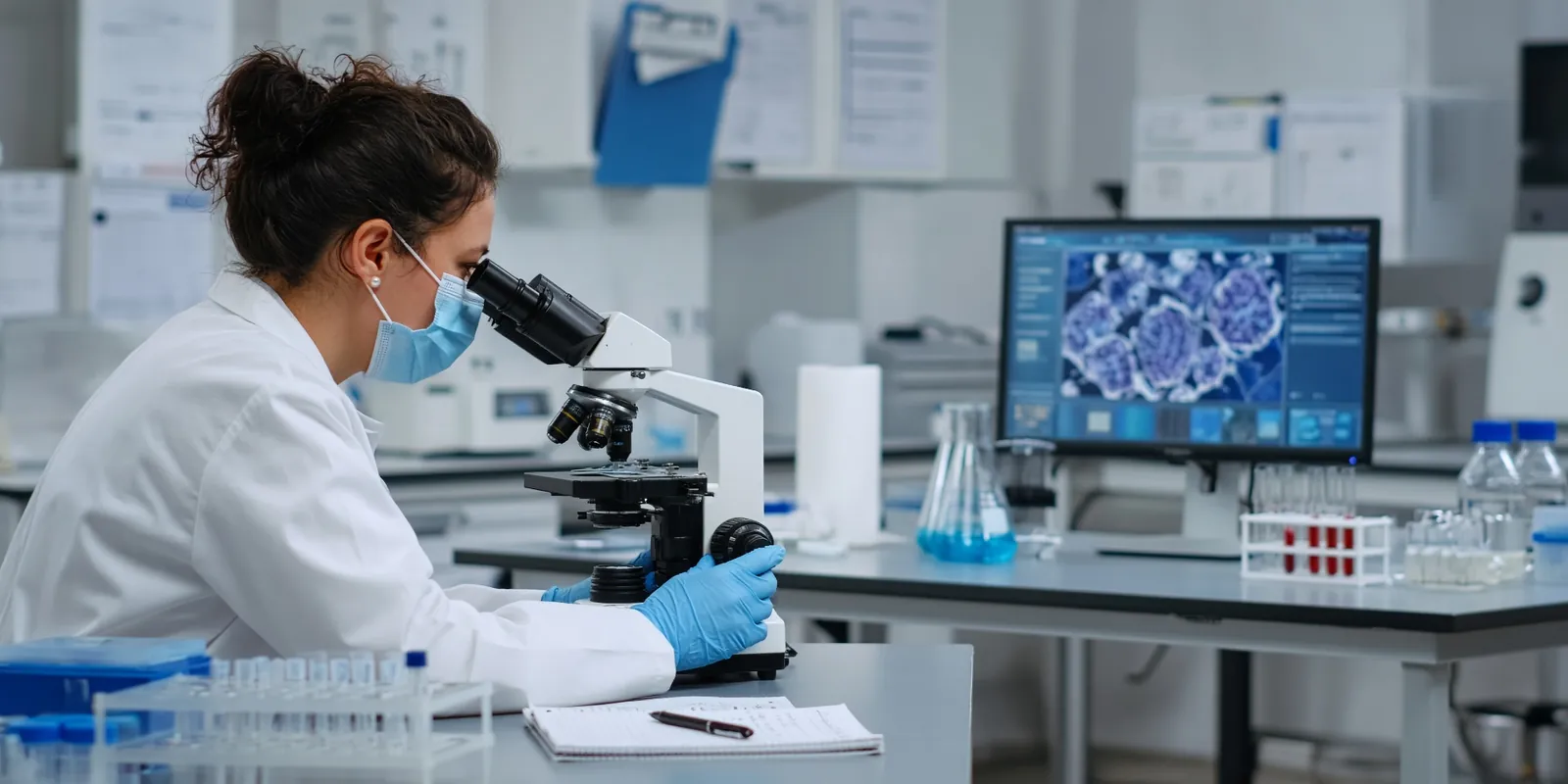
When a couple seeks help because pregnancy is slow to come, the man is just as concerned as the woman. Difficulty conceiving can come from one partner, the other or both. Semen analysis is the basic test of male fertility: it is simple, painless and provides essential information to guide the next steps.
Yet many men feel uneasy about it or put it off. This article explains how to prepare, how the test is done, what the laboratory measures and how to interpret the results with your doctor.
Why have a semen analysis?
Semen analysis is requested as part of a couple’s fertility assessment, from the very start, alongside the woman’s tests. It would be a pity for the wife to undergo many tests without this simple check having been done.
It may also be prescribed in other situations: after surgery or treatment that could affect fertility, in case of a testicular problem, or to confirm that a vasectomy has worked. Our article couple infertility: when to see a doctor explains when to start the assessment.
How to prepare
Good preparation makes the result more reliable:

- 2 to 7 days of abstinence before the sample, according to the laboratory’s instructions. Abstinence that is too short or too long can distort some parameters;
- mention any fever in the previous three months: sperm production takes about three months, and a fever can temporarily affect results;
- mention any medicines, smoking or other substance use;
- drink normally the day before and pass urine just before the sample.
How the test is done
The sample is usually collected at the laboratory, in a private dedicated room, by masturbation into a sterile container provided by the laboratory. Careful washing of the hands and genitals is required beforehand. Lubricants should be avoided, as they can harm sperm.
The sample must be complete: if part of the ejaculate is lost, tell the biologist. In some cases, collection at home is possible, provided the sample reaches the laboratory quickly and is kept at body temperature.
What the laboratory measures
Volume and appearance
The biologist measures the volume of the ejaculate, its pH, viscosity and appearance. A very low volume may point to a collection problem or an issue with the genital tract.
Sperm count
This is the number of sperm per millilitre and in the total ejaculate. Oligospermia means the count is below reference values, and azoospermia means no sperm at all.
Motility
The laboratory assesses the proportion of sperm that move, especially those moving forward. Insufficient motility is called asthenospermia.
Vitality and shape
Vitality measures the share of living sperm. Morphology examines their shape: head, midpiece and tail. A high proportion of abnormal forms is called teratospermia.
Other elements
The laboratory also looks for white blood cells, which may suggest infection, and sometimes for antibodies against sperm.
How to interpret the results
Results are compared with reference values established in large populations. But a result outside these values does not mean pregnancy is impossible, and a normal result does not tell the whole story: interpretation is always done together with the rest of the couple’s assessment.
A key point: one semen analysis is not enough to draw conclusions. Semen quality naturally varies from one sample to another. If the first test shows an abnormality, the doctor usually requests a second analysis a few weeks to three months later.
What next?
Depending on the results, several paths are possible:
- further tests: hormone tests, testicular ultrasound, semen culture if infection is suspected, a sperm preparation test to assess sperm quality after processing, and genetic tests in some cases;
- correcting contributing factors: stopping smoking, losing weight, treating an infection or a varicocele;
- a suitable assisted reproduction technique: insemination when parameters are moderately affected, IVF, or ICSI when abnormalities are more marked. ICSI involves injecting a single sperm directly into the egg. Our article on the difference between ICSI and IVF describes this technique.
Looking after fertility day to day
A few habits support good semen quality: not smoking, limiting alcohol, keeping a healthy weight, exercising regularly, avoiding excessive heat on the testicles, such as a laptop on the thighs for long periods or very hot baths, and eating a balanced diet. These measures take about three months to show their effect.
Male fertility assessment in Fes
An abnormal semen analysis is not an end, but the start of a process. It helps understand the situation and choose the right treatment for the couple.
At Boudra Fertility Center, an IVF center in Fes, Dr Najib Boudra, a gynecologist with more than 30 years of experience, and his team support couples through their fertility assessment, interpretation of semen analysis and the choice of assisted reproduction technique, including ICSI in the laboratory. Book a couple consultation on 05 35 93 08 18.
Book an appointment in Fes
A question, a first appointment? The Boudra Fertility Center team is here to help.
Boudra Fertility Center, 7 Rue Abdelkrim El Khattabi, 30000 Fes, Morocco
Frequently asked questions
Is semen analysis painful?
No. It is a simple semen sample collected by masturbation in a dedicated room at the laboratory.
How many days of abstinence are needed?
Usually 2 to 7 days. Follow your laboratory’s specific instructions.
Does an abnormal result mean we cannot have a child?
No. It should first be checked with a second test. Many abnormalities can be treated, and techniques such as ICSI make pregnancy possible.
Should the test be repeated?
Yes if there is an abnormality, because semen quality varies between samples. A second test is usually requested a few weeks later.
This article is for information only and does not replace a consultation. For any question about your situation, talk to your doctor.