
IVF and ICSI are often mentioned as two different treatments. In fact, ICSI is a form of IVF: the journey is the same, only the fertilisation step in the laboratory changes.
Here is what sets ICSI apart from conventional IVF, when it is offered and what it means for the couple.
A reminder: how conventional IVF works
In conventional IVF, the eggs collected at retrieval are placed in a culture dish with a large number of prepared sperm. Fertilisation happens “naturally”: a sperm cell enters the egg on its own. The next day, the embryologists check which eggs have been fertilised.
This method requires sperm that are numerous and mobile enough to fertilise the egg by themselves.
ICSI: one sperm cell injected into the egg
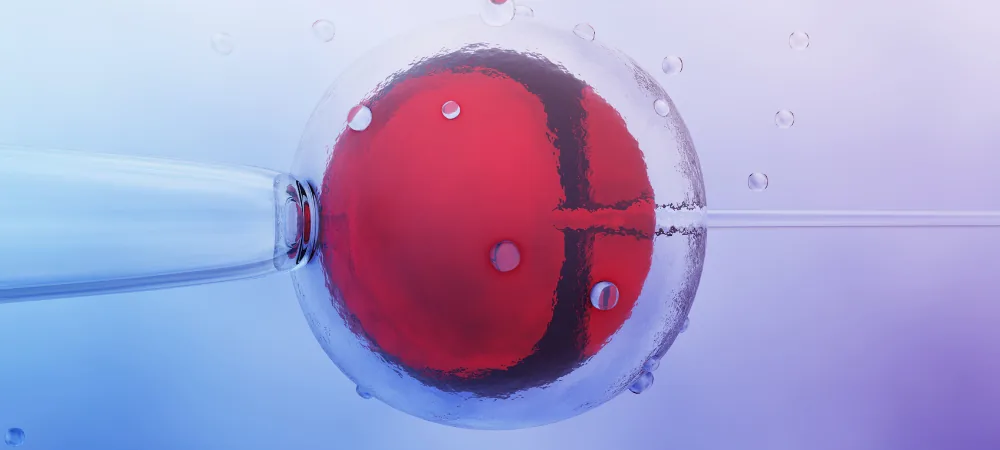
ICSI stands for intracytoplasmic sperm injection. Under a microscope fitted with micromanipulation tools, the embryologist selects a normal-looking, mobile sperm cell and injects it directly into the egg with a very fine micropipette.
Each mature egg thus receives one sperm cell. The technique makes fertilisation possible even when sperm are few or have poor mobility.
What stays the same
For the couple, the journey is almost identical:
- the same initial tests;
- the same ovarian stimulation and ultrasound monitoring;
- the same egg retrieval under anaesthesia;
- the same embryo culture and transfer into the uterus.
The difference lies only in the laboratory, on the day of egg retrieval.
The schedule, medicines and instructions given to the couple therefore remain the same. When ICSI is decided in advance, it is simply noted in the file; it can also be chosen on the day of retrieval if the semen sample is weaker than expected.
Retrieval day, step by step
On the morning of the retrieval, the patient is welcomed at the center and the eggs are collected under anaesthesia. Meanwhile, the husband provides his semen sample, which is prepared to isolate the most mobile sperm.
In the laboratory, the cells surrounding the eggs are removed to check their maturity. Only mature eggs can be injected. ICSI is performed in the following hours, and fertilisation is checked the next day. The couple is kept informed of how the embryos develop until the transfer.
Which couples is ICSI for?
ICSI is mainly offered for male infertility, but not only:
- very few sperm, poor mobility or abnormal shape;
- sperm obtained surgically (testicular biopsy) when there are none in the ejaculate;
- failed or very low fertilisation in a previous conventional IVF;
- a limited number of eggs collected, to make the best use of them;
- use of the husband’s frozen sperm, in some situations.
Preparing the semen sample
The sample is provided at the center, in a dedicated room, on the day of retrieval. The laboratory gives precise instructions, in particular on the recommended abstinence period beforehand and on hygiene. Following them helps obtain a better-quality sample.
If providing a sample may be difficult, tell the team in advance: solutions exist, such as freezing sperm beforehand.
Is ICSI “better” than IVF?
No, it is simply suited to other situations. When the semen is normal, conventional IVF remains a very good option. The choice between the two techniques is made by the doctor and the embryologist, based on the couple’s tests and sometimes on the day itself, depending on the quality of the sample.
In any case, neither IVF nor ICSI can guarantee a pregnancy. The doctor explains your chances honestly, based on your personal situation.
The role of the laboratory
ICSI requires specific equipment and experienced embryologists. Sperm selection, egg handling and embryo culture take place under strictly controlled conditions.
The laboratory of Boudra Fertility Center, the first IVF center in Fes, performs these techniques on site. To learn more, see our page on ICSI in Fes.
After injection, the eggs go back into the incubator. The embryologists observe the development of the embryos every day, using precise criteria, to choose with the doctor the embryo or embryos to transfer and those that can be frozen.
Male tests, a key step
Before offering ICSI, the semen analysis is often completed by other tests, and the man may be referred for a specialist consultation. Understanding the cause of a sperm abnormality sometimes makes it possible to treat it and adapt the care.
For an overview of all the options, see our page on assisted reproduction in Fes.
Book an appointment in Fes
A question, a first appointment? The Boudra Fertility Center team is here to help.
Boudra Fertility Center, 7 Rue Abdelkrim El Khattabi, 30000 Fes, Morocco
Frequently asked questions
Does ICSI change anything for the woman?
Very little. Stimulation, egg retrieval and transfer are the same as for conventional IVF. Only the fertilisation step in the laboratory differs.
Is ICSI painful for the man?
No, when a semen sample can be provided. If sperm must be retrieved surgically, the procedure is done under anaesthesia.
Who decides between conventional IVF and ICSI?
The doctor and the embryologist, based on the couple’s tests and sometimes on the quality of the sample on retrieval day. The decision is explained to you.
Does ICSI guarantee a pregnancy?
No. ICSI helps fertilisation when sperm cannot fertilise the egg on their own, but no technique can guarantee a pregnancy.
This article is for information only and does not replace a consultation. For any question about your situation, talk to your doctor.